
Why Does Corona Taste Skunky?
Learn why Corona sometimes develops its signature skunky aroma. Discover how sunlight, clear bottles, and beer chemistry create the lightstruck flavor—and why many people associate it with Corona.
If you've ever opened a bottle of Corona and noticed a skunky aroma, you're not imagining it.
In fact, for many drinkers, that distinctive smell has become part of Corona's identity.
But it isn't an ingredient.
It isn't intentional flavoring.
And it isn't unique to Corona.
That aroma develops because of a chemical reaction between light and compounds naturally found in beer.
The good news?
Once you understand why it happens, you'll start noticing the same process in other beers—and you'll better understand how packaging influences flavor.
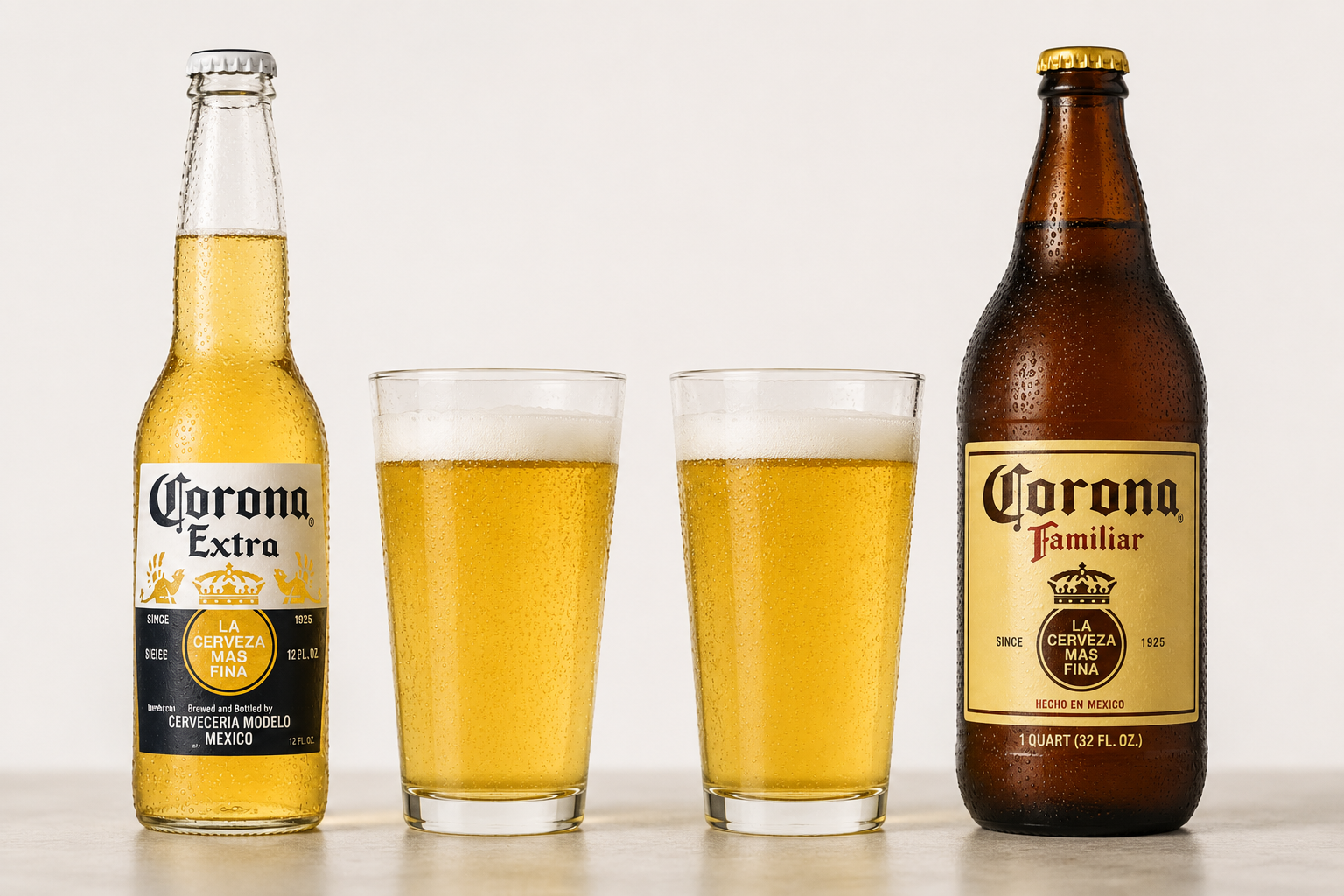
Why Does Corona Taste Skunky?
Corona Extra (clear bottle) and Corona Familiar (brown bottle) are nearly identical beers. The biggest difference is the packaging: clear glass allows much more UV light to reach the beer, increasing the likelihood of developing the familiar lightstruck ("skunky") aroma, while brown glass provides significantly greater protection.
Short Answer
Corona tastes skunky because it is packaged in a clear glass bottle.
Clear glass allows ultraviolet (UV) light to reach the beer. When UV light reacts with hop-derived iso-alpha acids, it creates a sulfur-containing compound called 3-methyl-2-butene-1-thiol (MBT).
MBT has an extraordinarily low sensory threshold and smells remarkably similar to a skunk's defensive spray.
This process is called lightstruck or skunking.
The beer itself hasn't spoiled—it has simply developed a new aroma because of light exposure
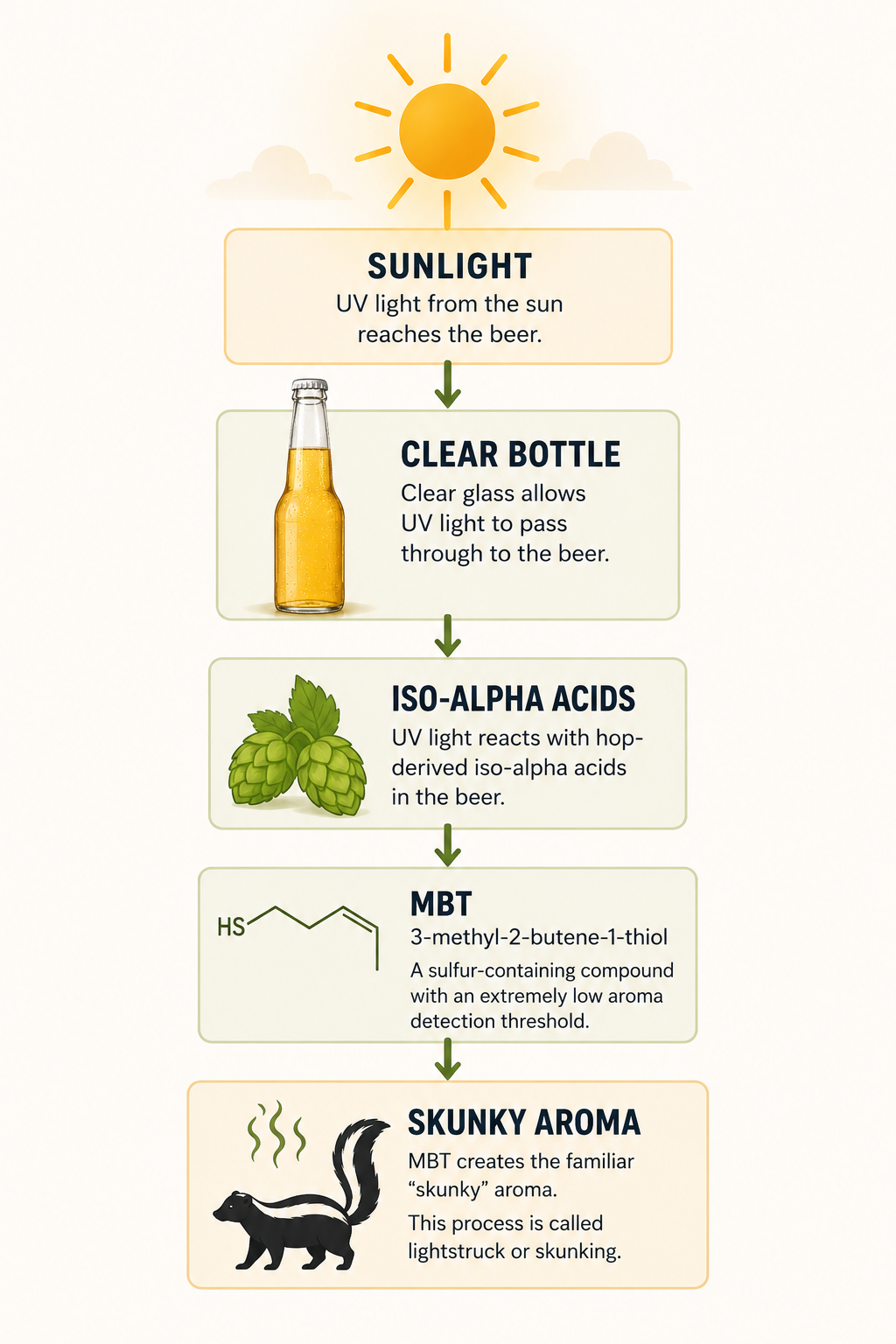
How beer becomes lightstruck. Ultraviolet (UV) light passes through clear glass and reacts with hop-derived iso-alpha acids to form MBT (3-methyl-2-butene-1-thiol), the sulfur compound responsible for beer's characteristic "skunky" aroma. This process, known as lightstruck or skunking, is why bottle color has such a significant impact on beer aroma.
What Causes Beer to Become Skunky?
Beer contains bitter compounds derived from hops called iso-alpha acids.
These compounds are perfectly stable in darkness.
When ultraviolet light reaches the beer, however, those compounds break apart and react with sulfur-containing molecules naturally present in beer.
The result is MBT.
Humans can detect MBT at incredibly tiny concentrations—measured in parts per trillion.
That's why even a small amount dramatically changes how a beer smells.
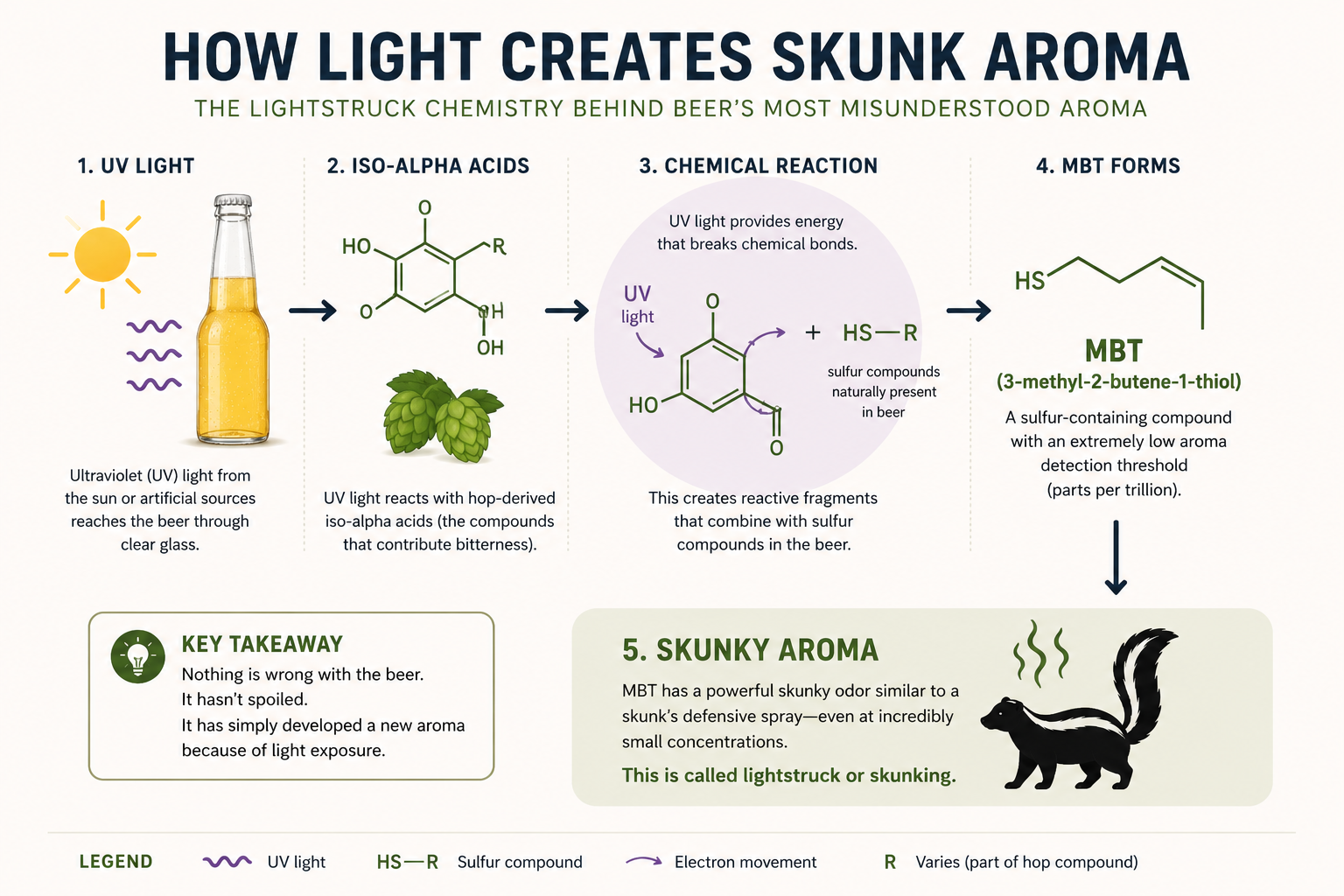
The chemistry behind skunky beer. Ultraviolet (UV) light provides the energy needed to break down hop-derived iso-alpha acids. The resulting fragments react with naturally occurring sulfur compounds to form 3-methyl-2-butene-1-thiol (MBT), an extraordinarily potent aroma compound detectable at extremely low concentrations. MBT is responsible for the characteristic "skunky" aroma of lightstruck beer.
Why Is Corona More Susceptible Than Other Beers?
The biggest reason is the bottle.
Clear bottles
Allow nearly all UV light to reach the beer.
Green bottles
Block some UV light.
Brown bottles
Block much more UV light and greatly reduce the reaction.
Corona Extra's iconic clear bottle offers very little protection.
By comparison, Corona Familiar uses brown glass, making it much less likely to develop noticeable lightstruck character.
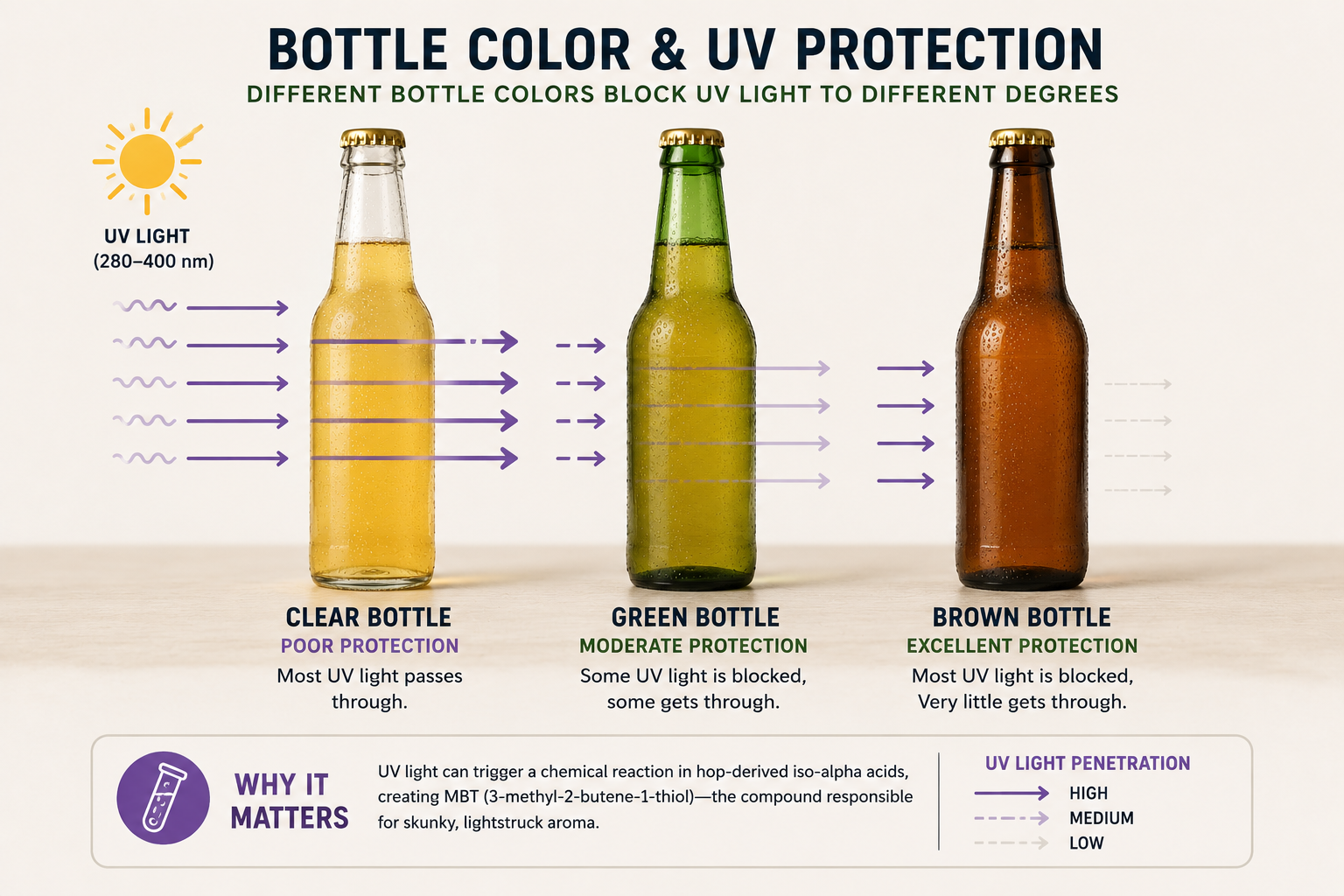
UV protection by bottle color. Clear bottles allow the most ultraviolet light to reach beer; green bottles provide moderate protection, and brown bottles block most UV light. Because UV light triggers the formation of MBT—the compound responsible for lightstruck or "skunky" aroma—beer packaged in brown bottles is much less likely to develop this off-flavor than beer packaged in clear bottles.
Is Corona Supposed to Taste Skunky?
Not exactly.
The brewery doesn't add a "skunk" flavor.
Instead, Corona's packaging makes it much easier for the beer to develop that aroma if exposed to sufficient light.
Because Corona has been sold in clear bottles for decades, many drinkers now associate the lightstruck aroma with the brand itself.
For some people, that aroma has become part of what they expect when drinking Corona.
Does Every Bottle of Corona Taste Skunky?
No.
How much skunk character develops depends on several factors, including:
how much light the beer has received
how long it was exposed
storage conditions
age
the type and amount of hops used
A freshly packaged Corona stored in complete darkness may show very little lightstruck character.
A bottle displayed under bright store lighting or left in the sun can develop noticeable MBT surprisingly quickly.
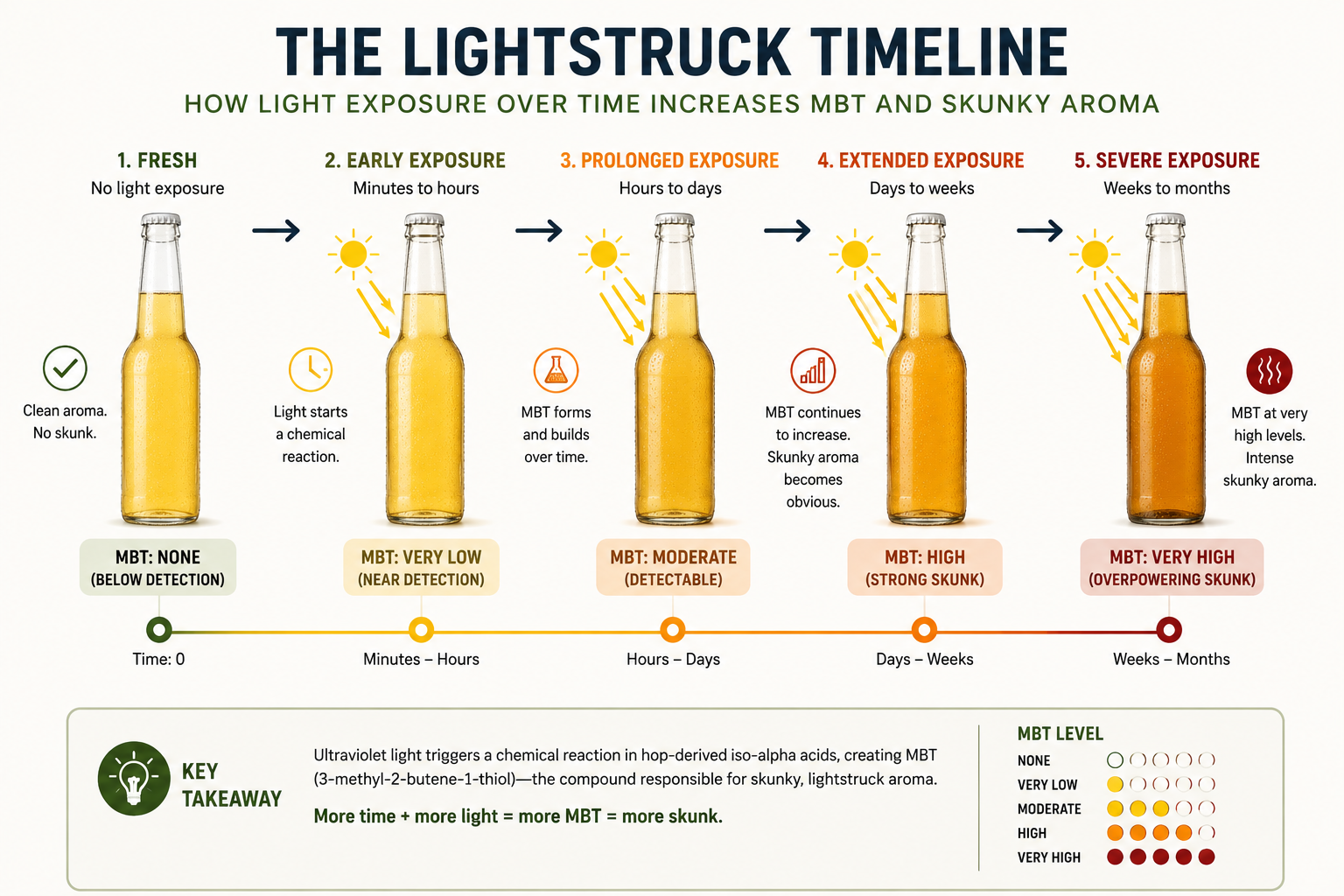
Formation of lightstruck aroma over time. As beer is exposed to ultraviolet (UV) light, hop-derived compounds gradually form increasing amounts of MBT (3-methyl-2-butene-1-thiol), the compound responsible for skunky aroma. More light exposure generally leads to more MBT and a stronger lightstruck character.
Does the Lime Prevent Skunking?
No.
Adding lime doesn't stop MBT from forming.
However, the citrus aroma may partially mask the skunky character, making it less noticeable to some drinkers.
Whether that improves the experience is entirely a matter of personal preference.
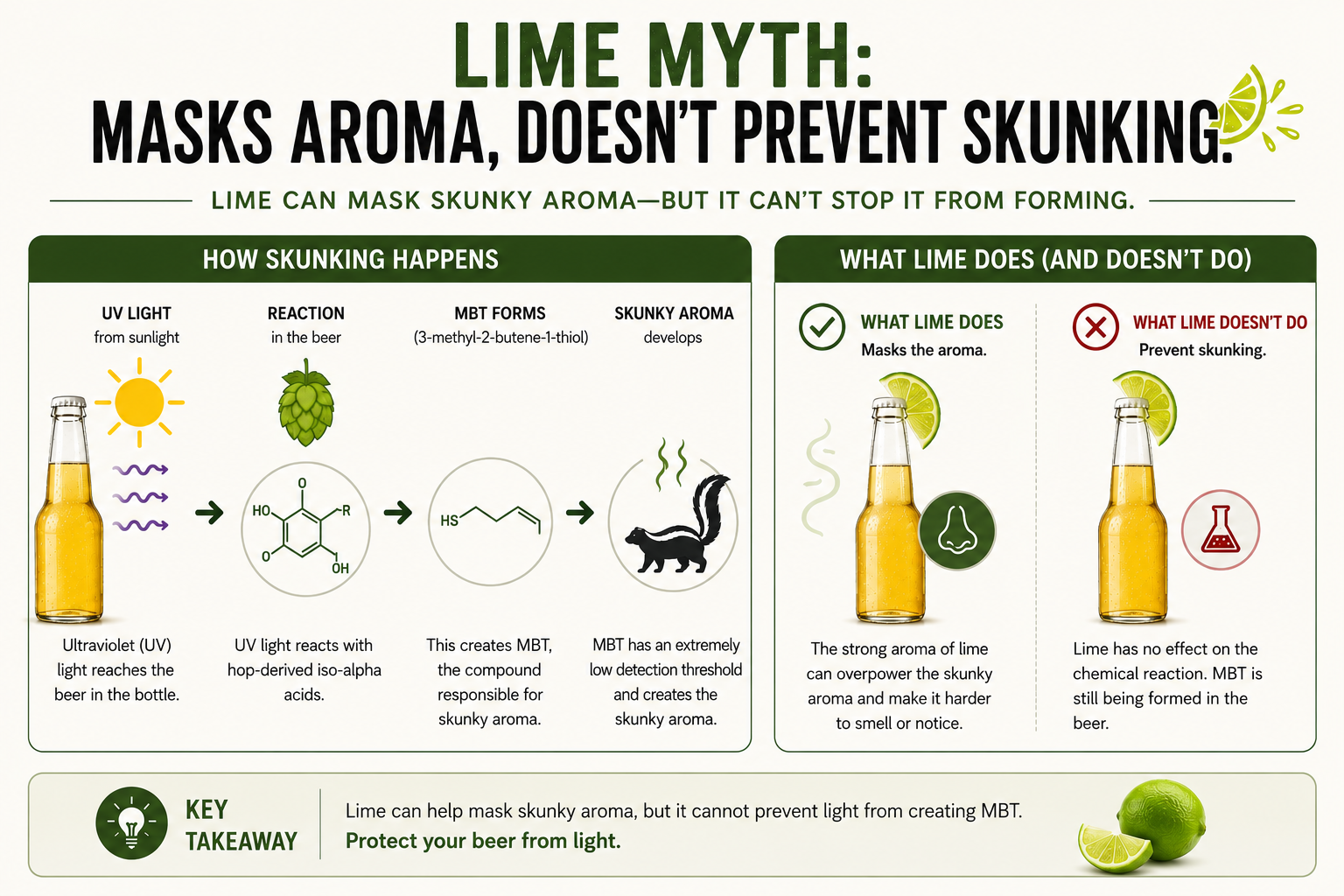
Lime can reduce the perception of skunky aroma by adding a strong citrus scent, but it does not prevent the chemical reaction that forms MBT (3-methyl-2-butene-1-thiol). Once a beer has become lightstruck, lime may mask the aroma, but it cannot reverse or prevent skunking.
Can You Taste the Difference?
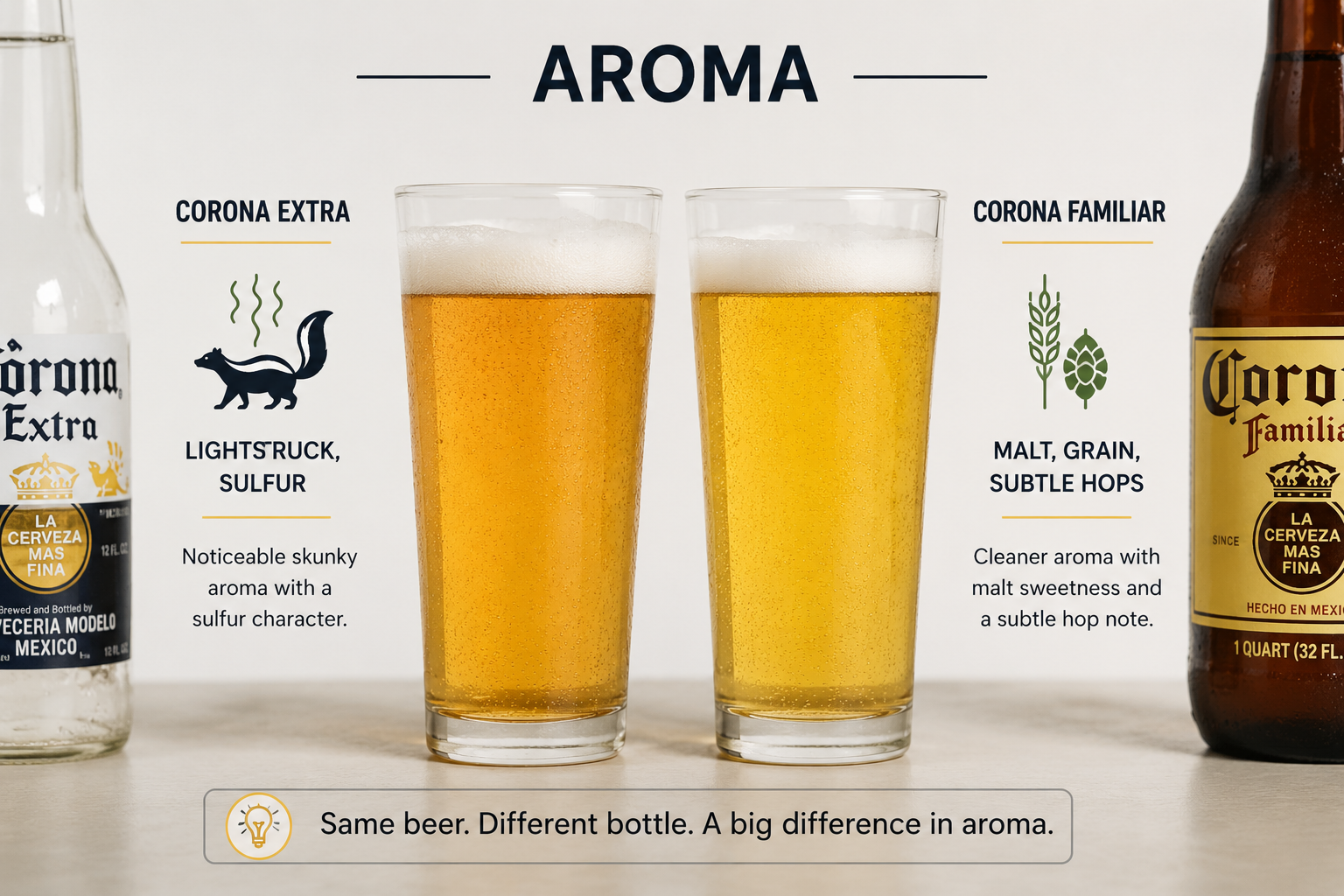
One of the easiest ways to experience lightstruck beer yourself is by comparing Corona Extra and Corona Familiar side by side.
Serve both at the same temperature in identical glasses.
Smell each before taking a sip.
Most people notice:
Corona Extra
Lightstruck
Sulfur
Skunky
Corona Familiar
Cleaner aroma
No skunkiness
Subtle malt and hops
The beers are remarkably similar beneath the aroma.
Removing the lightstruck character allows more of the original malt and hop profile to come through.
Why Brewers Usually Choose Brown Bottles
Most breweries that package beer in bottles prefer brown bottles because they provide much better protection against ultraviolet light.
Some breweries also use cans, which block light completely.
Others use specially modified hop extracts that do not react with UV light in the same way, allowing beer to be packaged in clear glass without becoming lightstruck as easily.
Packaging is a design decision—and every choice involves tradeoffs between appearance, marketing, cost, and flavor stability.
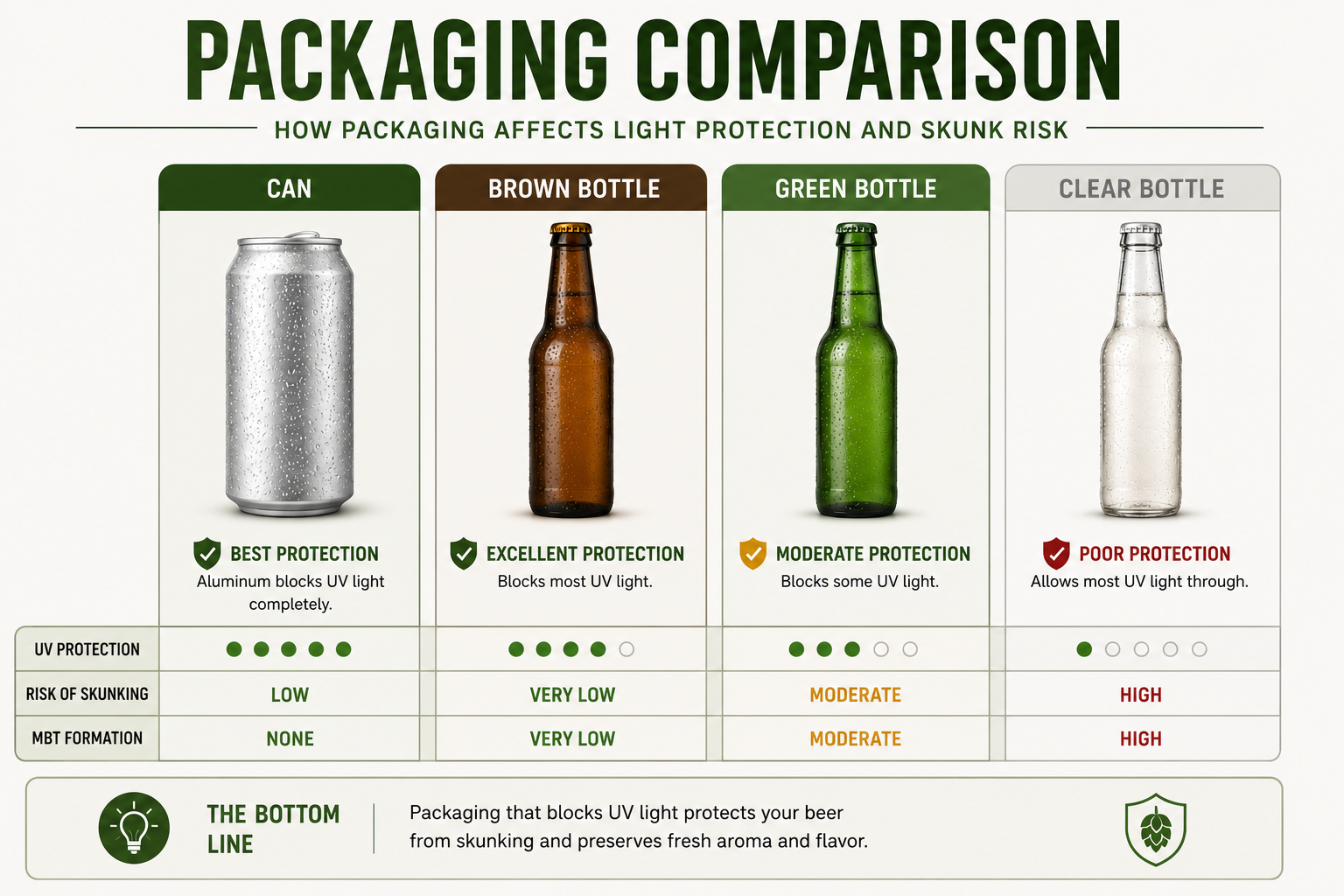
Packaging has a major influence on beer freshness. Aluminum cans completely block ultraviolet (UV) light, while brown glass blocks most UV, green glass blocks some, and clear glass offers very little protection. As UV exposure increases, so does the likelihood of MBT formation—the compound responsible for lightstruck ("skunky") aroma. This comparison summarizes how different package types affect the risk of skunking.
Frequently Asked Questions
-
Yes. Lightstruck beer is safe to drink. The aroma changes, but it does not make the beer unsafe.
-
Yes. Fluorescent lights, LED lighting with UV output, and sunlight through windows can all contribute, although direct sunlight is much faster.
-
In direct sunlight, noticeable changes can occur within minutes. Under typical indoor lighting, the process is generally much slower.
-
Not directly. Bottle color affects how much light reaches the beer, which can influence aroma over time.
The Bigger Lesson
Corona's characteristic aroma isn't simply about the recipe.
It's a reminder that flavor depends on much more than ingredients alone.
Packaging matters.
Storage matters.
Light matters.
Understanding those factors helps explain why two bottles of the "same" beer can taste surprisingly different—and why sensory evaluation means paying attention to everything that happens before the beer reaches your glass.
Continue Exploring Beer Sensory Science
Corona Familiar vs. Corona Extra: What’s the Difference?
See how changing only the bottle color changes the sensory experience.
Why Beer Becomes Lightstruck: The Science Behind Skunky Beer and Green Bottles
Learn the chemistry behind MBT formation and why some packaging protects beer better than others.
Aroma: Explore the Wheel Beer Master Kit
Train your nose to recognize common beer aromas.
About the author: Jen Blair is a Master Cicerone®, Master BJCP judge, beer educator, and sensory specialist. She develops practical tools for learning how beer flavor works and how to evaluate it more clearly.