
Corona Familiar vs. Corona Extra: What’s the Difference?
If you've ever compared Corona Familiar and Corona Extra side by side, you've probably noticed something surprising: despite being nearly the same beer, they don't necessarily taste the same.
The reason isn't a different recipe.
It's the bottle.
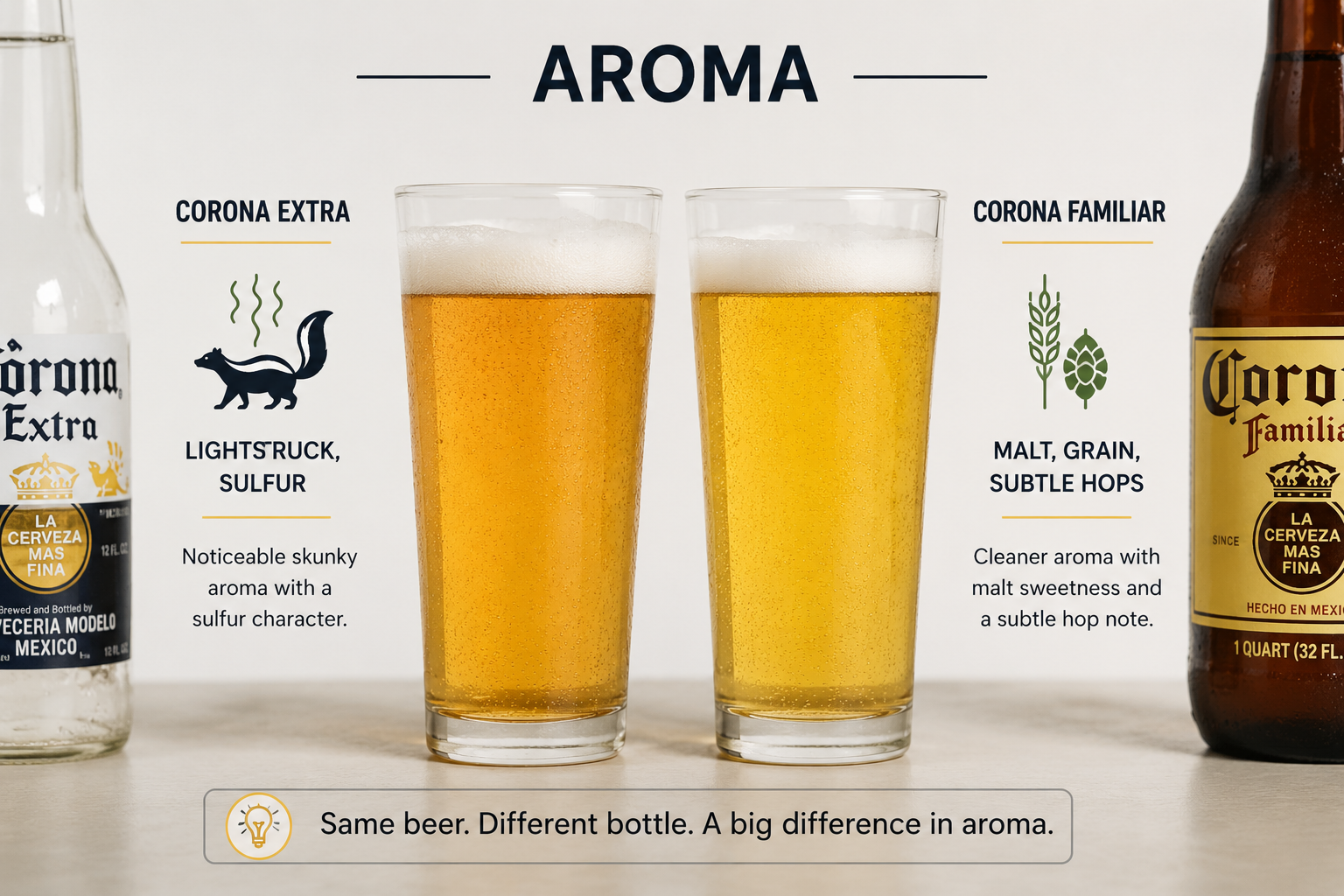
Comparing the aroma profiles of Corona Extra and Corona Familiar. Although the beers begin with essentially the same recipe, their aroma can differ dramatically because of bottle color. Corona Extra, packaged in a clear bottle, often develops lightstruck (MBT) aromas described as skunky or sulfur-like after light exposure. Corona Familiar, packaged in a brown bottle, is protected from most ultraviolet light, allowing more of the beer's original malt, grain, and subtle hop aromas to remain apparent.
Corona Extra is packaged in clear glass, while Corona Familiar comes in brown glass. That seemingly small packaging choice changes how much light reaches the beer, which can dramatically affect its aroma and, as a result, its flavor.
Let's look at why.
Short Answer
If you're only looking for the quick answer:
Corona Extra is packaged in a clear bottle that allows ultraviolet (UV) light to reach the beer. Over time, this creates the familiar "skunky" aroma many people associate with Corona.
Corona Familiar is packaged in a brown bottle, which blocks much more UV light. The result is a beer with far less lightstruck character, allowing its original malt and hop profile to come through more clearly.
The beer itself is essentially the same.
The package changes the sensory experience.
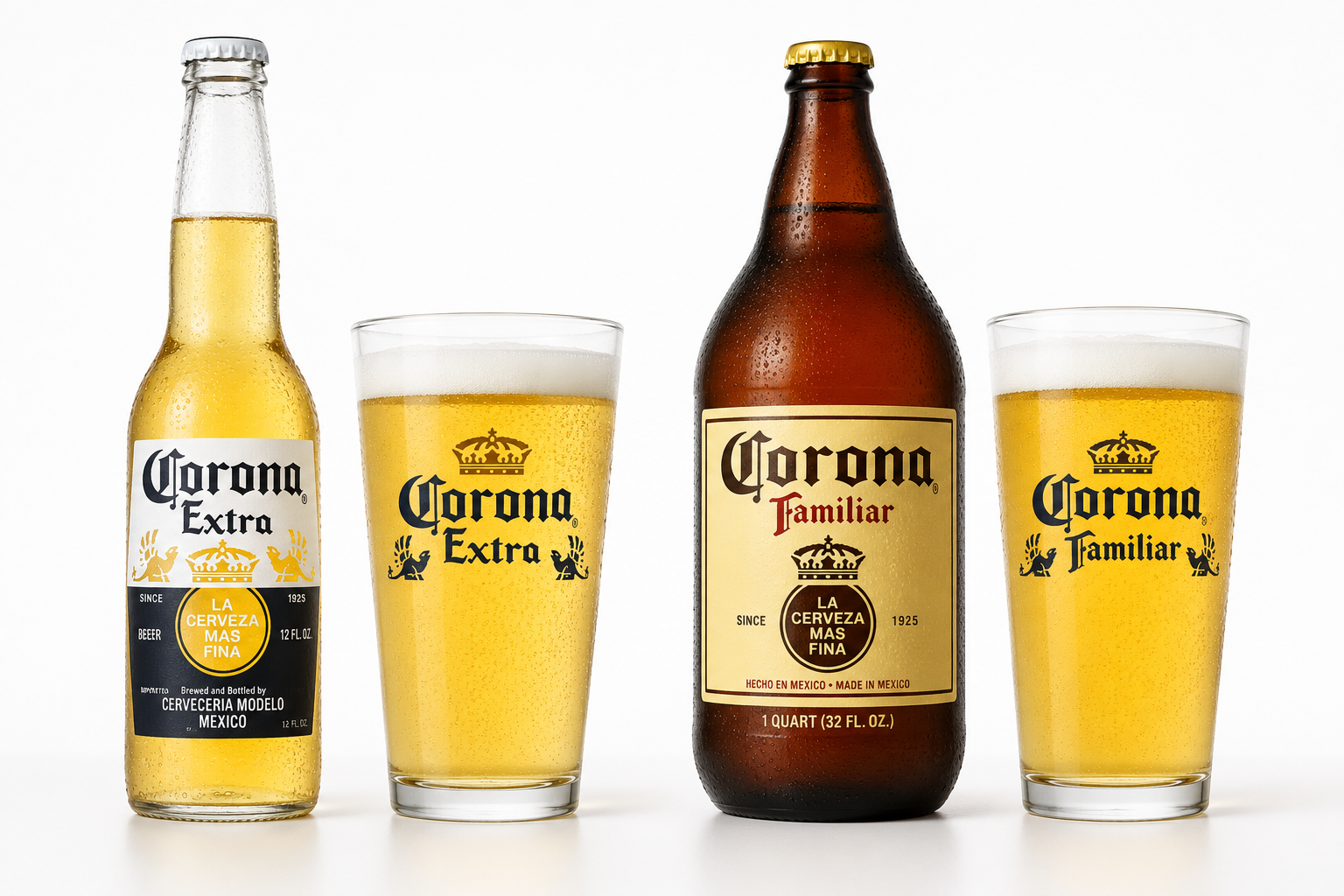
Side-by-side comparison of Corona Extra in a clear bottle and Corona Familiar in a brown bottle, each poured into identical glasses to illustrate the primary packaging difference between the two beers.
Why Does the Bottle Matter?
Beer and sunlight aren't friends.
When ultraviolet light reaches beer, it reacts with hop compounds called iso-alpha acids. That reaction produces an incredibly potent sulfur-containing compound called 3-methyl-2-butene-1-thiol (MBT).
You don't need to remember the chemistry.
You need to know that MBT smells remarkably similar to a skunk.
This process is called lightstruck or skunking.
Brown glass blocks much of the UV light responsible for this reaction, while clear glass offers very little protection.
Want to learn the science?
Read Why Beer Becomes Lightstruck (and Why Green Bottles Matter)
Other Beers Commonly Affected by Light:
Clear bottles:
Corona Extra
Sol
Some craft lagers
Green bottles:
Heineken
Beck’s
Grölsch
Brown bottles:
Sierra Nevada
Bell’s
New Belgium
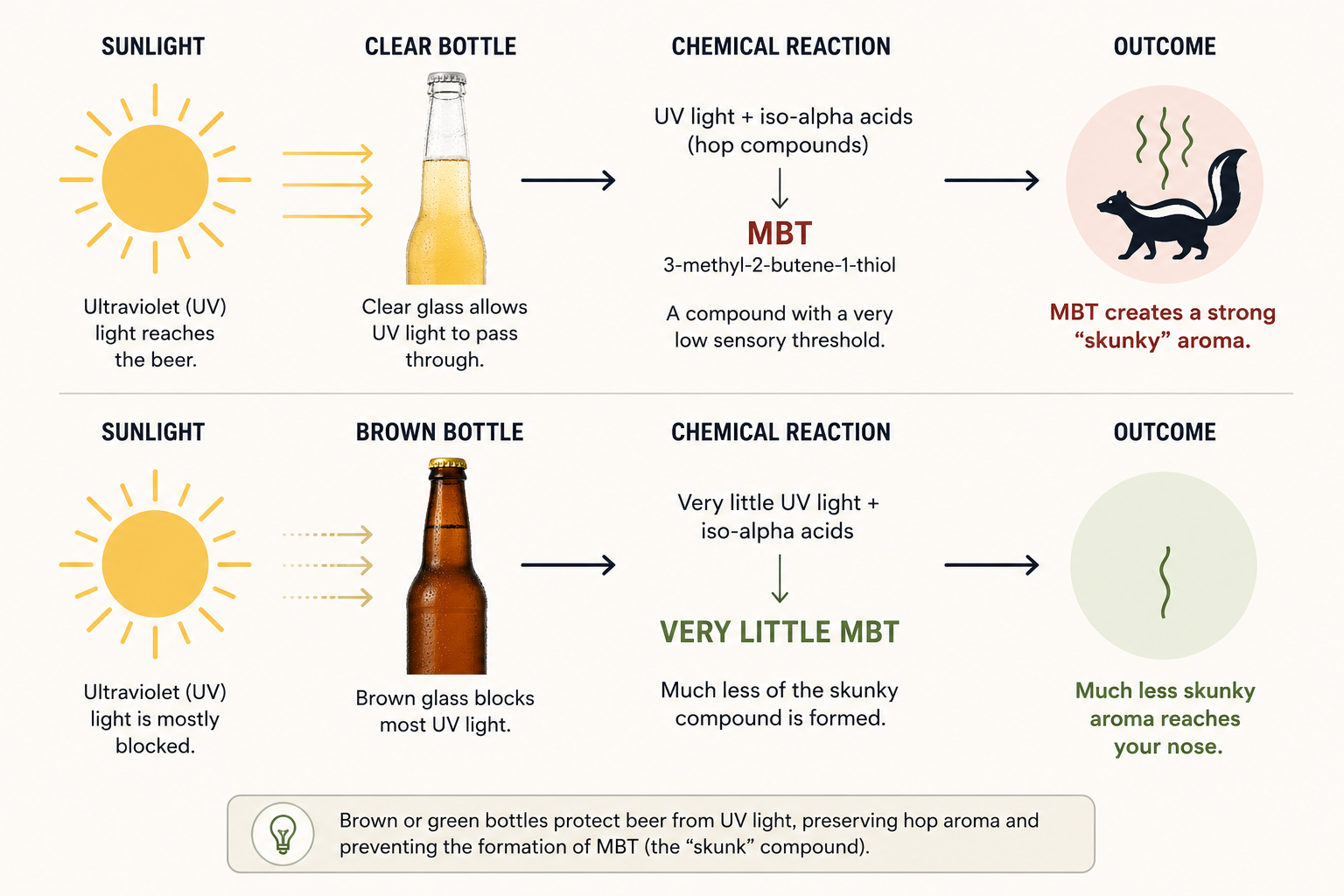
Figure 1. How bottle color influences skunking. Ultraviolet (UV) light reacts with hop-derived iso-alpha acids to form MBT (3-methyl-2-butene-1-thiol), the compound responsible for the characteristic "skunky" aroma in lightstruck beer. Clear bottles allow much more UV light to reach the beer than brown bottles, making beers packaged in clear glass much more susceptible to developing this off-flavor.
My Side-by-Side Tasting
To compare them fairly, I served both beers at the same temperature in identical glasses.
Aroma
The biggest difference appeared before I even took a sip.
Corona Extra immediately presented the familiar lightstruck aroma that's become part of its identity for many drinkers.
Corona Familiar, by comparison, had a much quieter aroma. Without the lightstruck character dominating the glass, I could detect a subtle grainy malt sweetness and a restrained hop character that are easy to overlook in Corona Extra.
Flavor
The beers tasted much closer than they smelled.
The skunky aroma from Corona Extra contributes substantially to what many people think of as "Corona flavor." Without that aroma, Corona Familiar seemed lighter, cleaner, and less flavor-intensive overall.
Rather than tasting like an entirely different beer, it tasted like the same beer with one very noticeable aroma removed.
Try This Yourself
One of the easiest ways to experience how much aroma contributes to flavor is with a simple experiment.
The Retronasal Aroma Test
Pour a Corona Extra.
Pinch your nose closed.
Take a sip.
Swallow.
Release your nose.
Many people notice that very little of Corona's characteristic flavor appears until they release their nose, and the aroma reaches the olfactory receptors through retronasal olfaction.
Try the same experiment with another aromatic beer such as an IPA or Belgian ale and notice how much aroma contributes to flavor.
It's a simple demonstration that flavor is far more than taste alone.
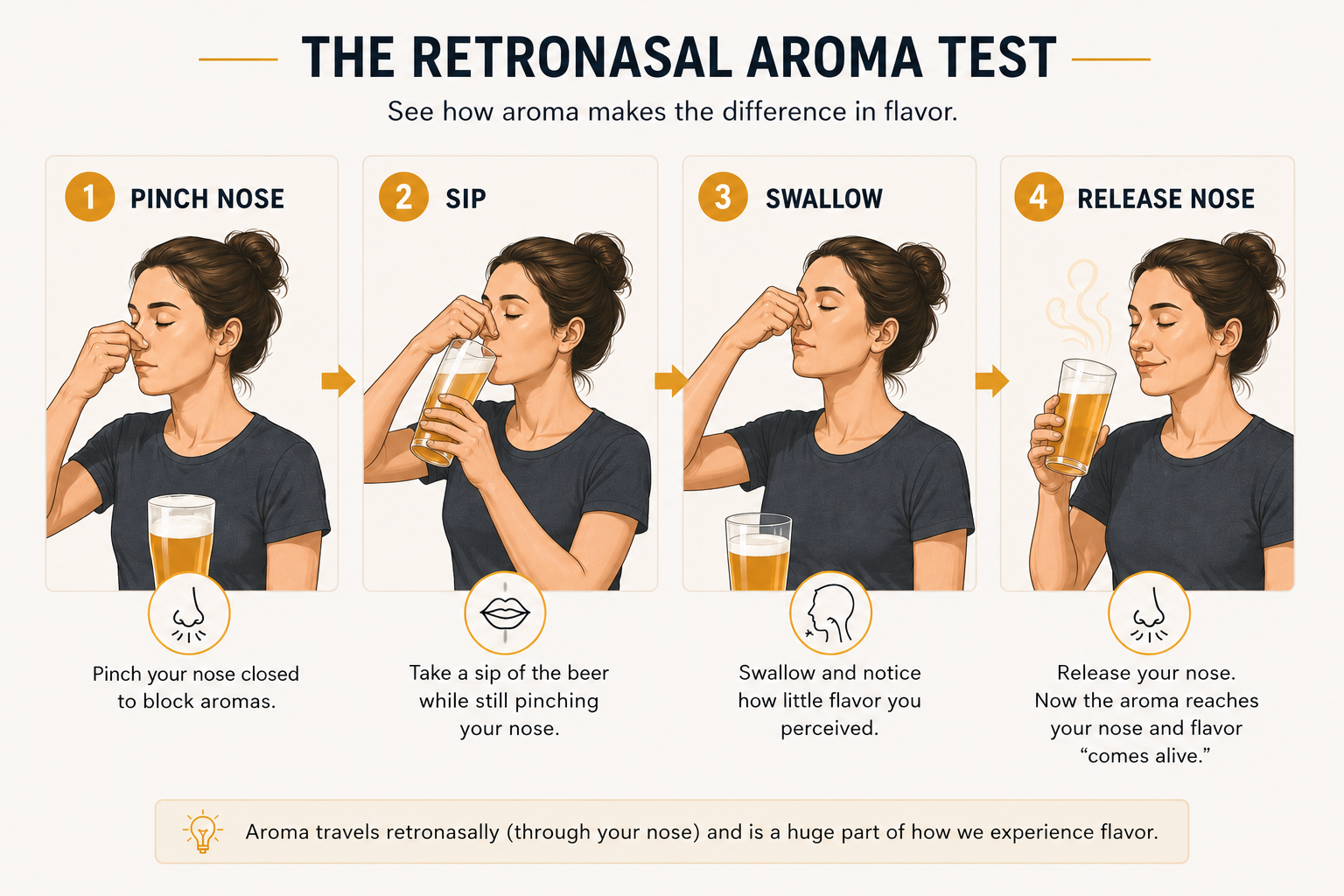
Figure 3. A simple demonstration of retronasal aroma. Pinch your nose before taking a sip of beer, keep it pinched while you swallow, then release it. Most of the beer's aroma becomes noticeable only after your nose is released because volatile aroma compounds travel from the back of the mouth into the nasal cavity—a process known as retronasal olfaction. This simple experiment demonstrates why aroma contributes so much to what we perceive as flavor.
Which One Should You Buy?
If you enjoy the classic Corona experience, Corona Extra delivers exactly what most people expect.
If you're curious about what the beer tastes like with far less lightstruck aroma, Corona Familiar is worth seeking out.
Which one you'll prefer depends on whether you enjoy Corona's characteristic lightstruck aroma or would rather taste more of the beer's original malt and hop character.
They're simply different sensory experiences created by different packaging.
Explore Beer Styles Side by Side.
Curious how Corona compares to other beer styles? Download the free beer style comparison chart to explore differences in color, strength, bitterness, flavor, and more.
Frequently Asked Questions
-
Not significantly. The primary difference is the brown bottle, which better protects the beer from light exposure.
-
Because ultraviolet light reacts with hop compounds in the beer, creating sulfur compounds that smell similar to skunk.
-
Yes.
Lightstruck beer is a flavor change, not a food safety issue.
-
Indirectly, yes.
Bottle color changes how much light reaches the beer, which changes the aroma. Since aroma contributes heavily to flavor perception, the beer can taste noticeably different.
-
Adding a lime wedge doesn't prevent the beer from becoming lightstruck or reverse the chemical reaction that creates the skunky aroma. However, the bright citrus aroma can partially mask the lightstruck character, making it less noticeable to some drinkers.
Whether you prefer Corona with or without lime comes down to personal taste, but the lime changes what you smell—not the chemistry of the beer.
The Bigger Lesson
Corona Familiar and Corona Extra are a great reminder that what we perceive isn't determined only by a brewer's recipe.
Packaging matters.
Storage matters.
Aroma matters.
Changing just one variable—the color of the bottle—can noticeably change the drinking experience without changing the beer itself.
Once you notice that, you'll start paying much closer attention to how beer is packaged, stored, and served.
Continue Exploring Beer Sensory Science
Want to train your nose?
Aroma: Explore the Wheel Beer Master Kit
Ready for guided sensory exercises?
Sensory as Strategy
Originally published as part of my "I Tried It" series, where I explored new beers and brewing questions through hands-on tasting. This article has been updated with current sensory science and educational resources.
About the author: Jen Blair is a Master Cicerone®, Master BJCP judge, beer educator, and sensory specialist. She develops practical tools for learning how beer flavor works and how to evaluate it more clearly.
Originally published July 2016. Updated July 2026.