
Why Does Beer Taste Like Banana?
Isoamyl acetate, fermentation, and the distinctive banana aroma of Hefeweizen
Some beers smell and taste like banana because yeast produces a fermentation compound called isoamyl acetate. It is especially prominent in German Hefeweizen and some Belgian-style beers, where it may resemble banana candy, pear drops, bubblegum, or ripe fruit.
Isoamyl acetate is an ester, one of the major families of aroma compounds created during fermentation. The yeast strain is the most important factor in determining how much appears in a finished beer, although fermentation conditions can also influence its expression.
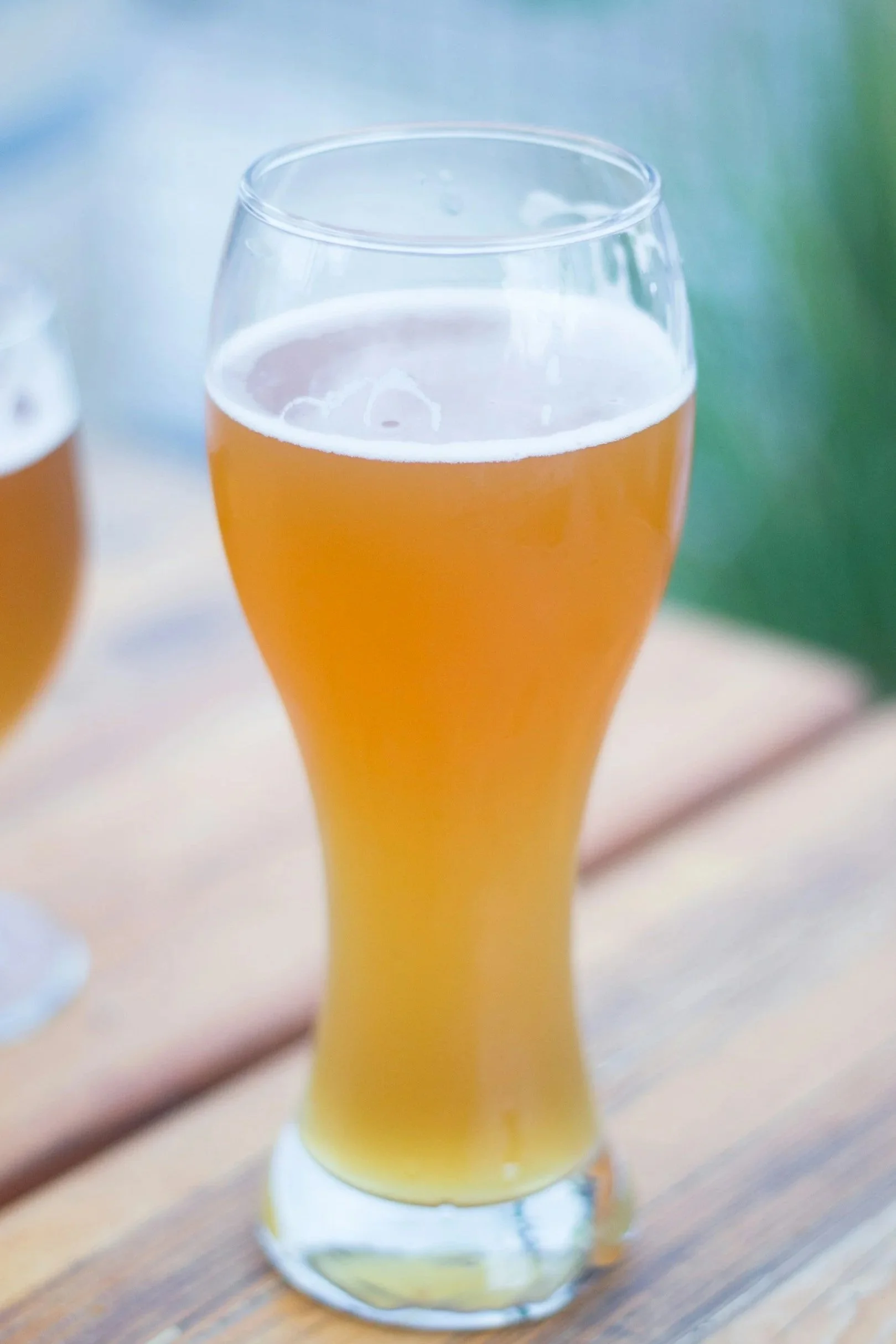
Why Beer Can Taste Like Banana
Compound: Isoamyl acetate
Compound family: Ester
Common descriptions: Banana candy, pear drops, bubblegum, circus peanuts
Common beer styles: Hefeweizen, Weissbier, Weizenbock, some Belgian ales
Primary source: Yeast metabolism during fermentation
Always a flaw? No. It may be desirable, neutral, or inappropriate depending on the beer style.
What Causes Banana Flavor in Beer?
Isoamyl acetate is an ester formed during fermentation. Esters are created when organic acids react with alcohols, and they contribute many of the fruity aromas associated with beer.
In the name isoamyl acetate, “isoamyl” refers to the alcohol component and “acetate” refers to the acid-derived component. Although isoamyl acetate can occur at low levels in many beers, some yeast strains produce substantially more of it than others.
Why Hefeweizen Often Smells Like Banana
The yeast strain is the most important factor in producing the characteristic banana aroma of Hefeweizen. Traditional German wheat-beer strains can produce relatively high concentrations of isoamyl acetate, while the cleaner yeast strains commonly used for American wheat beer generally produce less.
Fermentation temperature, wort composition, pitching rate, oxygen availability, and yeast health may also affect ester production. These factors do not operate independently, so simply fermenting warmer does not guarantee a better or more pronounced banana character.
Practice Recognizing Beer Aromas.
Reading that isoamyl acetate smells like banana is useful. Comparing aroma references and describing them without seeing the answer helps turn that knowledge into sensory recall.
Aroma: Explore the Wheel Beer Master Kit provides structured aroma practice designed by Master Cicerone Jen Blair.
Learn More About Fermentation Aromas.
What Does Isoamyl Acetate Smell Like?
Isoamyl acetate may resemble artificial banana flavoring, banana candy, pear drops, bubblegum, or circus peanuts. If you have eaten banana-flavored Runts or Laffy Taffy, you have encountered a familiar version of this aroma.
Beer judges evaluate banana character based on its intensity, quality, and appropriateness for the declared style.
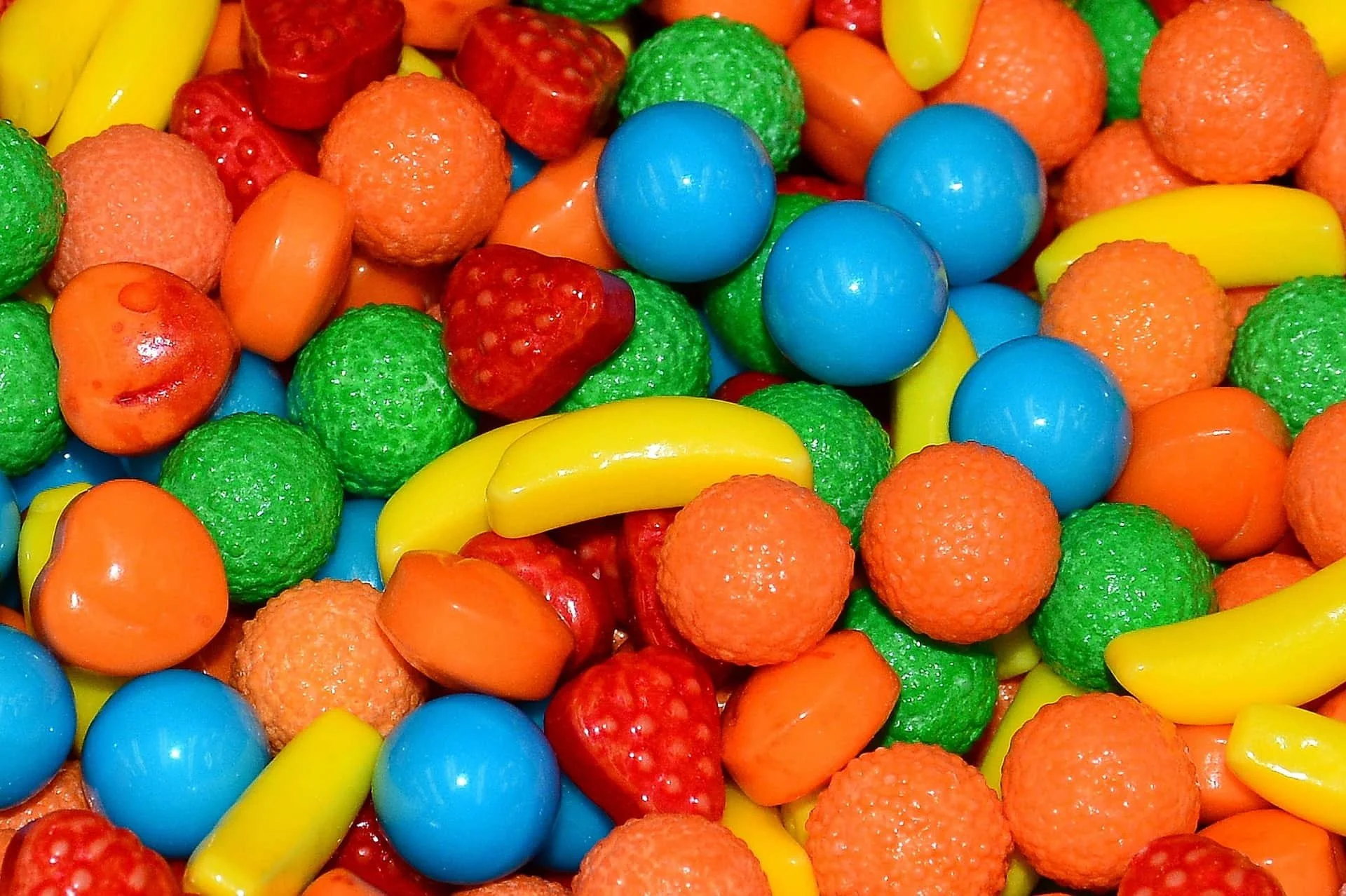
Assorted fruit candy representing banana-candy and bubblegum descriptions of isoamyl acetate
What Happens to Isoamyl Acetate in Brettanomyces Beer?
Brettanomyces can transform or reduce some esters over time, so a beer’s fruity aroma may change as it develops. Isoamyl acetate and Brettanomyces character are not necessarily mutually exclusive, but the balance and intensity of the banana-like aroma may shift during fermentation or aging.
Why Banana Candy Does Not Taste Like a Cavendish Banana
Modern banana candy often seems more intense and one-dimensional than the Cavendish bananas commonly sold today. One frequently repeated explanation is that the flavor more closely resembles Gros Michel, the banana variety that dominated international trade before Panama disease devastated commercial production.
Gros Michel is still grown in limited quantities, and descriptions frequently characterize it as sweeter and more aromatic than Cavendish. However, artificial banana flavor is not a precise recreation of one banana variety. Its recognizable character comes largely from a simplified mixture in which isoamyl acetate is especially prominent.
During the 20th century, Panama disease (a type of fungus called Fusarium oxysporum) wiped out almost all the Big Mikes. As it turns out, another strain of banana, known as the Cavendish banana. was resistant to Panama disease and thus became the most popular banana strain.
Is Banana Flavor Good or Bad in Beer?
Banana character is not automatically a flaw. Its appropriateness depends on the beer style, its intensity, and how it interacts with the rest of the beer.
In a Hefeweizen or Weizenbock, moderate banana aroma may be expected and desirable. In a clean American lager or American wheat beer, a strong banana note would usually be unexpected. When evaluating the beer, ask:
Is banana character appropriate for the style?
Is it subtle, moderate, or dominant?
Does it complement clove, bread, malt, or other fermentation character?
Does it make the beer more expressive, or does it obscure everything else?
How Can Brewers Influence Banana Aroma?
Brewers can influence ester expression through yeast selection and fermentation management. The yeast strain should be the first consideration. Fermentation temperature, pitching rate, oxygenation, wort gravity, yeast health, and vessel geometry may also affect ester production.
Because these variables interact, make one controlled change at a time and record the results rather than relying on a single rule such as “ferment warmer for more banana.”
For guided tasting experiments designed for brewers, visit Sensory as Strategy for Homebrewers.
The Takeaway
When beer smells or tastes like banana, isoamyl acetate is usually the primary reason. Yeast produces this fruity ester during fermentation, and certain wheat-beer and Belgian yeast strains express it more strongly than cleaner brewing strains.
Recognizing the compound is only the first step. The more useful sensory skill is learning to evaluate its intensity, describe its character precisely, and decide whether it belongs in the beer you are tasting.
Go Beyond Memorizing Flavor Compounds
Sensory as Strategy provides guided exercises that help you investigate how you perceive, describe, and distinguish beer sensations—not simply memorize vocabulary.
Frequently Asked Questions
-
Traditional German wheat beer yeast produces relatively high concentrations of isoamyl acetate during fermentation.
-
No. In many wheat beers, it is expected.
-
Only in styles where it doesn't belong.
-
Traditional Hefeweizen strains and some Belgian strains.
-
Artificial banana flavor emphasizes isoamyl acetate much more than modern Cavendish bananas.
Continue Learning About Beer Flavor
About the author: Jen Blair is a Master Cicerone®, Master BJCP judge, beer educator, and sensory specialist. She develops practical tools for learning how beer flavor works and how to evaluate it more clearly.
Originally published October 31, 2017. Updated July 2026.