
Esters v. Phenols
Esters are formed by the reaction of organic acids and alcohols created during fermentation. Esters are influenced by three factors of the fermentation process:
Yeast characteristics
Wort composition
Fermentation conditions
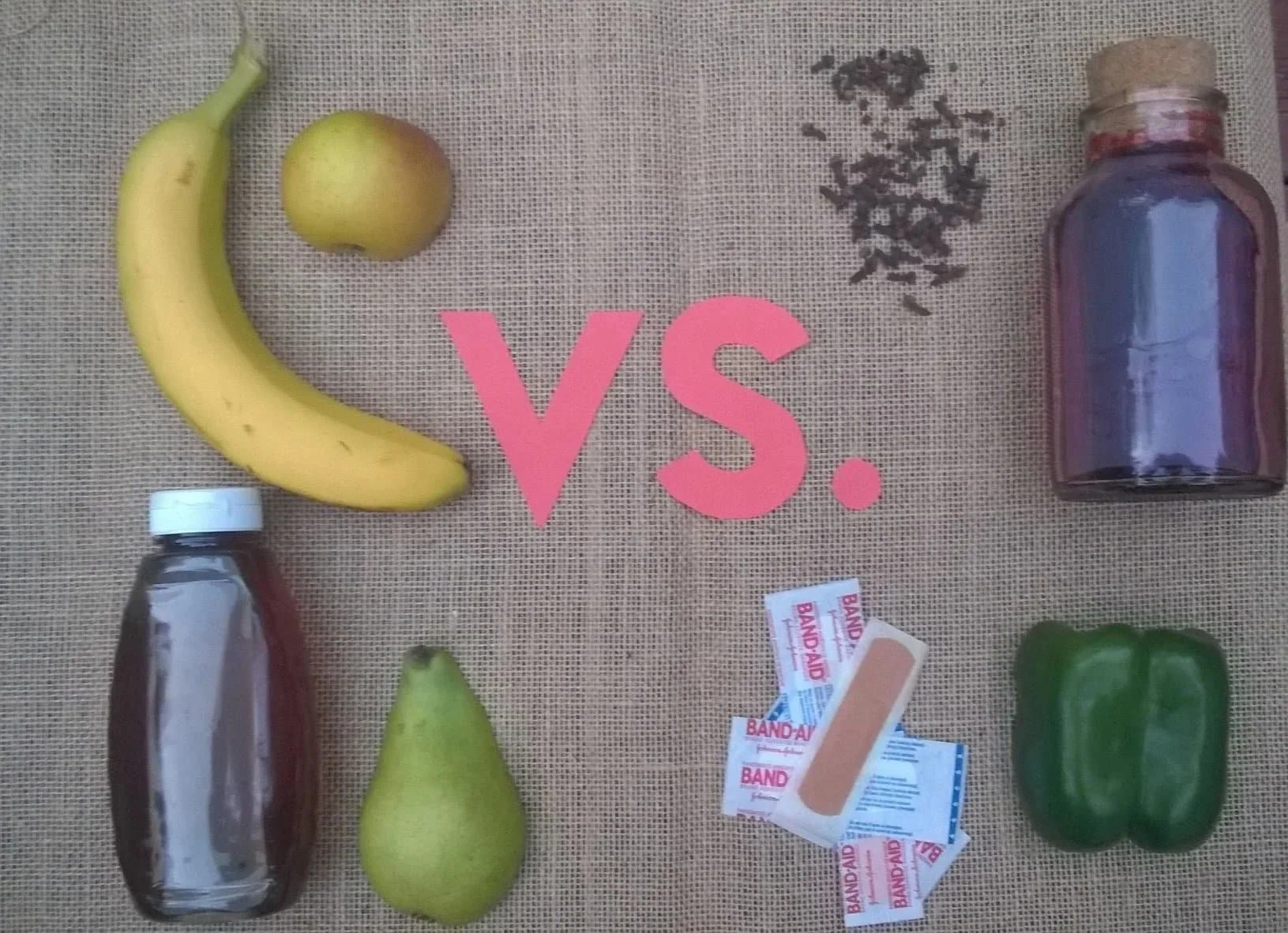
When you detect the following aromas and flavors in beer, you are likely detecting esters:
Anise (ethyl caproate)
Apple (ethyl caprylate)
Banana or Pear (isoamyl acetate)
Honey or Roses (phenylethyl acetate)
Nail polish remover (ethyl acetate)
Phenols are always present in beer, but are usually considered off flavors. Volatile phenols are generally the phenolic flavors people can pick up in beer because they are detectable at very small concentrations. Phenols are generally derived from three different sources:
Water and smoked malts
Chemicals, notably chlorine and bromine
Yeast and/or bacteria
When you detect the following aromas and flavors in beer, you are likely detecting volatile phenols:
Barnyard/mice (4-Ethylphenol)
Cloves (4-Vinyl guaiacol)
Medicinal/Band-Aids/Sore Throat Spray (4-Ethylphenol)
Pepper
Smoke (4-Ethylguaiacol)
Tannins
Generally, esters are fruity and usually desirable, whereas phenols are spicy and usually undesirable.
Read more about esters and phenols here and here.