
SRM vs. EBC: What's the Difference Between Beer Color Scales?
How SRM and EBC are measured, how to convert between them, and why the numbers aren't interchangeable.
If you've ever compared American and European brewing resources, you've probably noticed that beer color is reported using either SRM or EBC. Although both describe beer color, they use different measurement conventions and therefore produce different numerical values.
This guide explains how SRM and EBC are measured, why they produce different numerical values, how to convert between them, and when each color scale is used in brewing, judging, and recipe formulation.

SRM vs. EBC at a Glance
SRM
Primarily used in North America
Developed by the American Society of Brewing Chemists (ASBC)
Measured in a 1/2-inch cuvette
EBC
Primarily used in Europe
Developed by the European Brewery Convention (EBC)
Measured in a 1-cm cuvette
Conversion
EBC = SRM x 1.97
SRM = EBC x 0.508
SRM & EBC Calculator
Beer Color Converter
SRM ↔ EBC Calculator
Enter a beer color value in either field. The corresponding value will calculate automatically.
Commonly used in North American brewing references.
Commonly used in European and international brewing references.
EBC = SRM × 1.97
SRM = EBC × 0.508
Results are rounded to two decimal places. These equations provide an approximate conversion between the two beer color scales.
Learning Beer Calculations for an Exam?
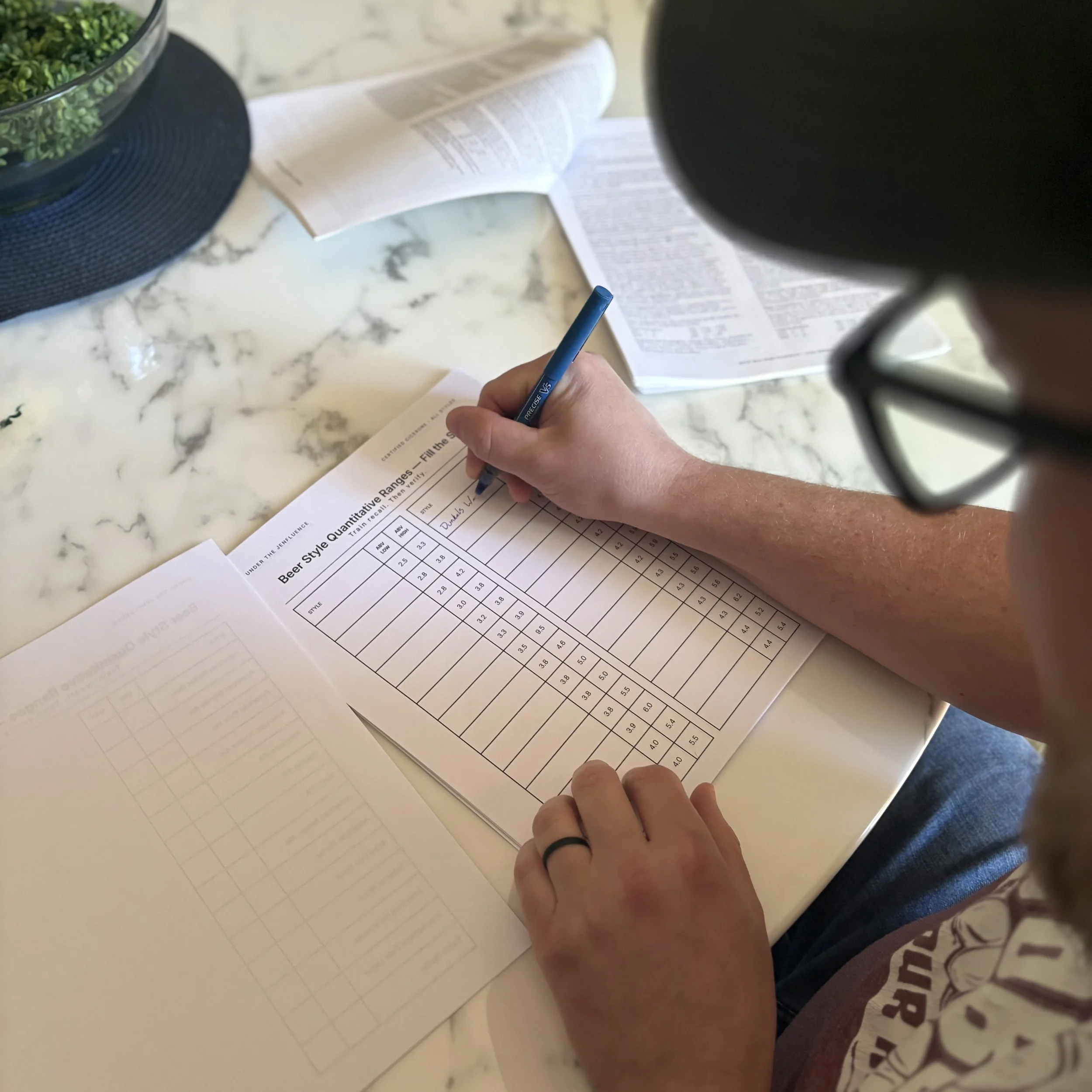
If you're studying for the BJCP or Cicerone exams, the Quantitative Calibration Worksheets include SRM, EBC, IBU, ABV, attenuation, and brewing calculations designed to build confidence—not memorization.
Common Beer Color Ranges
While SRM and EBC are measurement scales rather than style definitions, the examples below illustrate how the two scales correspond across a range of familiar beer styles.
| Beer Style | SRM | EBC |
|---|---|---|
| American Lager | 2–3 | 4–6 |
| German Pils | 2–4 | 4–8 |
| Belgian Tripel | 4.5–7 | 9–14 |
| American Pale Ale | 5–10 | 10–20 |
| American IPA | 6–14 | 12–28 |
| Vienna Lager | 9–15 | 18–30 |
| British Brown Ale | 12–22 | 24–43 |
| Munich Dunkel | 17–28 | 33–55 |
| American Porter | 22–40 | 43–79 |
| Imperial Stout | 30–40 | 59–79 |
Note: These ranges are based on the 2021 BJCP Beer Style Guidelines. Individual commercial examples may fall outside these ranges.

Infographic comparing the SRM (Standard Reference Method) and EBC (European Brewery Convention) beer color scales.
Why Isn't EBC Simply Another Name for SRM?
Although SRM and EBC both measure beer color by recording how much light a beer sample absorbs at a wavelength of 430 nm, they are not the same scale. The difference comes from the size of the cuvette (the clear container that holds the beer sample) used during the measurement. SRM is measured using a 1/2-inch (1.27 cm) cuvette, while EBC is measured using a 1-centimeter cuvette. Because the light passes through different path lengths, the resulting values differ by a consistent factor, making EBC approximately 1.97 times the corresponding SRM value.
Does Beer Color Affect Flavor?
Not directly. Beer color does not create flavor, but it often provides clues about the ingredients used to brew the beer.
Darker malts typically contribute both more color and flavors such as bread crust, toast, caramel, chocolate, coffee, or roast. Because these flavors often accompany darker beers, it's easy to assume that color itself is responsible. In reality, both the color and those flavors come from the same ingredients—not because the beer is dark.
That relationship isn't absolute, however. Two beers can have the same SRM but taste completely different depending on the grains, hops, yeast, and brewing process used. Likewise, two beers with very different SRM values may share similar flavor characteristics if they use comparable ingredients.
When evaluating a beer, think of SRM and EBC as measurements of appearance rather than predictors of flavor. They describe what you see in the glass, not necessarily what you'll taste.
Continue your beer education
Download the FREE Beer Style Comparison Chart
When Should Brewers Use SRM?
Homebrewers
Beer Judge Certification Program (BJCP)
American recipes
When Should Brewers Use EBC?
European breweries
European recipes
European specs
Why Beer Judges Learn Both SRM and EBC
Whether you're studying for the BJCP Beer Judge Certification Program, the Cicerone® Certification Program, or simply brewing from recipes published around the world, understanding both SRM and EBC is a practical skill. American brewing resources and style guidelines most commonly use SRM, while many European recipes, brewing texts, and technical publications use EBC. Knowing how the two scales relate allows you to interpret recipes accurately, compare beers across different sources, and communicate clearly with brewers and judges regardless of which color scale they use.
If you're studying for beer exams, becoming comfortable converting between SRM and EBC can also save valuable time. More importantly, understanding why the numbers differ—not just memorizing the conversion factor—makes it much easier to apply that knowledge confidently in brewing, judging, and recipe formulation.
The important thing isn't memorizing that EBC is approximately 1.97 times SRM. It's understanding that both scales describe the same characteristic using different measurement conventions. Once you understand that relationship, moving between American and European brewing resources becomes straightforward.
Practice Beer Color Calculations
Studying for beer exams?
The Quantitative Calibration Worksheets include SRM, IBU, ABV, attenuation, and brewing calculations designed to help you practice without simply memorizing formulas.
Frequently Asked Questions
-
No.
-
Countries in North America.
-
Most European countries and brewing literature.
-
Different measurement conventions.
-
Yes.
Multiply by 1.97.
-
No.
It only describes color.
-
Absolutely.
Learn More About Beer Brewing Science
About the author: Jen Blair is a Master Cicerone®, Master BJCP judge, beer educator, and sensory specialist. She develops practical tools for learning how beer flavor works and how to evaluate it more clearly.
Originally published January 2017. Updated July 2026.